 Madeira Trip Guide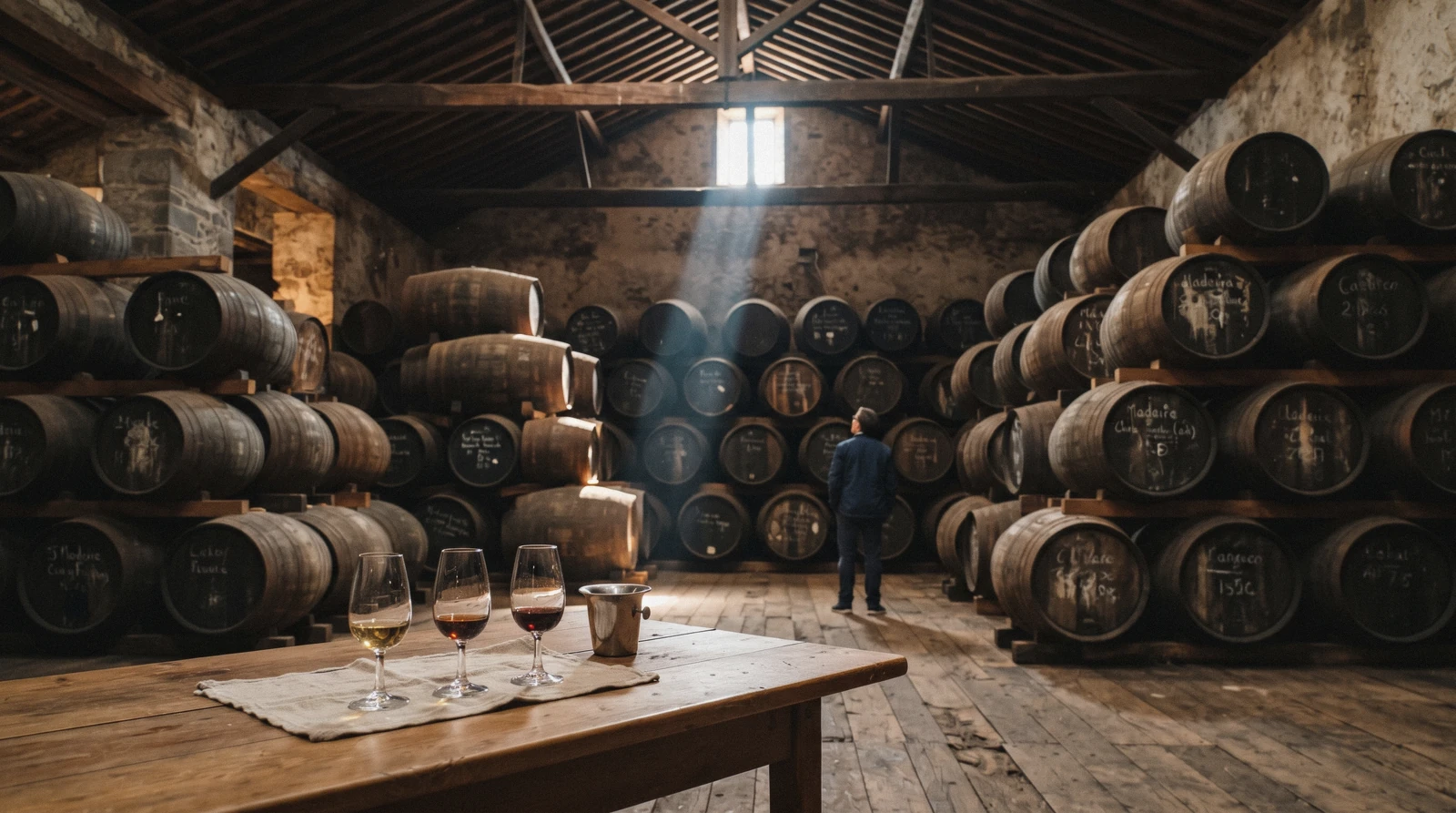
Madeira Wine: Styles, Age Labels and Tastings in Funchal
Madeira wine is aged by heat, at 45 to 50 °C in a tank or for years under the warm roof of a lodge, and the label tells you almost everything once you know the regional institute's rules. This page sets out the sweetness words, the grapes, the age categories and the two wine lodges Funchal council actually lists, with the tasting prices from each producer's own page. Read it beside our guide to planning Madeira and typical Madeira food, which is what the wine is poured with.
Quick answer Madeira wine in three lines: styles, labels, where to taste
Madeira wine is fortified by stopping the fermentation with wine alcohol at 96% vol, then aged either by estufagem, heated for at least 3 months at 45 to 50 °C, or by canteiro, at least 2 years in cask under the warm upper floors of a lodge. The sweetness word on the label, from Seco to Doce, tells you where the fermentation was stopped, and the age words tell you how long it aged: no age means at least 3 years, while Frasqueira means a single harvest, canteiro production and at least 20 years in wood. Funchal council lists exactly two wine lodges in the city, and both run guided tastings.
Key takeaways
- Short on time? The H.M. Borges winery tour with tasting runs 1 hour with 2 to 6 pours, $23.00 as listed.
- The lodge detail, room by room, is on our Blandy's Wine Lodge page, and the tasting prices are in the comparison.
- Pair it before you pour it: dry with aperitifs, sweet with dessert, on typical Madeira food.
- Prefer a spirit to a fortified wine? The sugar cane side of the island is on our poncha guide.
Madeira Wine Tastings in Funchal Compared
Lodge prices come from Blandy's own tours page, the winery tour price from its listing in US dollars, and the walking tours from their own listings. Lengths and the number of pours are each operator's own figures, which is why one column says pours and another says length.
| Tasting | Price | Length | Pours | Book |
|---|---|---|---|---|
| Blandy's Lodge Tour | $19.52 (€17) | 30 minutes | 2 samples | Blandy's own site, free cancellation 24 hours before |
| Blandy's Premium Tour | $26.40 (€23) | 45 minutes | 3 samples, plus the family museum | Blandy's own site, free cancellation 24 hours before |
| Blandy's Vintage Premium Tour | $67.70 (€59) | 1 hour 30 minutes | 5 wines including one Frasqueira | Blandy's own site, free cancellation 24 hours before |
| Blandy's Private Tour | $172.20 (€150) per person | 60 minutes | Not stated, maximum 4 people | Blandy's own site, free cancellation 24 hours before |
| H.M. Borges winery tour with tasting | $23.00 as listed | 1 hour | 2 to 6 pours with honey cake and sugar cane cookies | Free cancellation up to 24 hours before |
| Madeira food and wine walking tour | $109.00 as listed | 3 hours 30 minutes | 6 drinks with 11 food tastings | Free cancellation up to 24 hours before |
| Taste Funchal food, wine and culture tour | $107.00 as listed | 4 hours | Not stated, all tastings included | Free cancellation up to 24 hours before |
Lodge prices and times from Blandy's Wine Lodge tours, children aged 6 to 17 $9.64 (€8.40) and under 6 free on the same page. Tour prices as listed by the operators. Figures current in Q3 2026.
What Makes Madeira Wine Different
Two processes define this wine, and the regional institute publishes the rules for both. Once you know them, the words on a label stop being decoration.
Fortification: Stopping the Fermentation
The must is pressed and fermented, partly or fully, and the fermentation is then stopped by adding wine alcohol at 96% vol. The moment of that stop decides the sweetness: stop early and sugar is left in the wine, let it run and the wine finishes dry. Four types come out of that single decision: dry, medium dry, medium sweet and sweet.
That is why sweetness in Madeira is a production choice rather than a blend made later, and why the sweetness word and the grape name usually agree with each other.
Estufagem and Canteiro
After fortification the wine goes down one of two ageing roads, and the difference is the single most useful thing to know when you buy a bottle. Estufagem is the industrial route: stainless steel tanks heated by hot water coils, held at 45 to 50 °C for never less than 3 months, then rested at ambient temperature for at least 90 days. Canteiro is the slow route: casks laid on wooden beams, usually on the upper floors of the lodge where the building is warmest, ageing oxidatively for at least 2 years.
| Method | How it ages | Minimum | Earliest sale |
|---|---|---|---|
| Estufagem | Stainless steel tanks heated by hot water coils at 45 to 50 °C, then rested at room temperature | 3 months heated, then at least 90 days rest | Not before 31 October of the second year after the harvest |
| Canteiro | Casks on wooden beams on the warm upper floors of the lodge, oxidative ageing | 2 years in cask | At least 3 years counted from 1 January after the harvest |
Six Hundred Years of Being Shipped
Madeira was settled from 1419 and vines went in from the start. About 25 years after settlement the wine was already being exported, and in 1776 American independence was toasted with it. Visit Madeira adds Shakespeare, George Washington, Thomas Jefferson and Winston Churchill to the list of people who drank it.
The practical legacy is the one in your glass: a wine built to survive a ship's hold is a wine that survives an open bottle in your kitchen for months, which no table wine does.
Sources: the IVBAM Madeira wine portal on winemaking and ageing and history, plus Visit Madeira on Madeira wine.
Dry to Sweet: Reading the Sweetness Words
Five words cover every bottle, and the institute defines them by Baumé degree rather than by taste. The sugar figures beside them are published as indicative values, and they overlap in the institute's own table, so treat the Baumé band as the rule and the grams as a guide.
The sweetness word sits on the front label, usually beside or under the grape name. If you are buying blind, Seco and Meio Seco are the aperitif end, Meio Doce and Doce the pudding end. The institute's own pairing advice is at the foot of this section.
| Label word | English | Baumé | Total sugar, indicative |
|---|---|---|---|
| Extra Seco | Extra dry | 0.5 or less | Up to 49 g/L |
| Seco | Dry | Below 1.5 | 49 to 65 g/L |
| Meio Seco | Medium dry | Between 1 and 2.5 | 57 to 80 g/L |
| Meio Doce | Medium sweet | Between 2.5 and 3.5 | 80 to 96 g/L |
| Doce | Sweet | Above 3.5 | 96 g/L and up |
What to Drink It With
The institute's own pairing note is short and worth following, because it is built around the four types rather than around a chef's menu. Madeira wine can be drunk at any hour of the day or night, which is a sentence no other wine region prints.
- Seco: aperitifs
- Meio Seco: aperitifs, or with soups
- Meio Doce: cheese
- Doce: desserts, chocolate and with coffee
Colour and Structure Words
Two more sets of words appear on back labels and tasting sheets. Colour runs Muito Pálido, Pálido, Dourado, Meio Escuro and Escuro, from the almost transparent young dry wines to the deep brown of long oxidative ageing. Structure runs Leve, Encorpado, Fino, Macio, Aveludado and Amadurecido.
You do not need them to buy well, but they tell you what a lodge guide is describing when they hand you the third glass.
Sources: IVBAM's types and categories page and its serving page. The sugar figures are printed there as merely indicative values.
Sercial, Verdelho, Boal, Malvasia, Terrantez and Tinta Negra
Six varieties do almost all the work, and each one is planted at a different height on the island, which is part of why each makes a different style. The table gathers what the institute publishes about each.
Read the table as a ladder. The higher and cooler the vineyard, the drier and more acidic the wine, which is why Sercial from the north is the aperitif and Malvasia from the warm south coast is the dessert wine.
| Grape | Style it makes | Where and how high it grows |
|---|---|---|
| Sercial, also called Esgana Cão | Dry, high acidity and astringency | Mainly the north and Câmara de Lobos, up to 600 m on the south coast and 200 m on the north |
| Verdelho | Medium dry, slightly fuller and less acidic than Sercial | Around 400 m |
| Boal | Medium sweet, medium bodied, balanced acidity and sweetness | Between 100 and 300 m |
| Malvasia-Cândida | Sweet, the first variety planted on the island, from Crete | Sea level to 200 m, mainly the south coast |
| Malvasia-de-São-Jorge | Sweet, the richest and most unctuous Madeiras | Mainly the north coast, 150 to 350 m |
| Terrantez | Medium sweet and medium dry, rare | South coast: Calheta, Câmara de Lobos and Funchal |
| Tinta Negra | All four types, dry through sweet | Funchal, Câmara de Lobos and São Vicente, introduced in the 18th century |
Why Most Bottles Name No Grape
Tinta Negra represents 80 to 85% of all Madeira wine production, so most of what is poured on the island is made from it. The institute calls it versatile and vigorous, and it can be made into any of the four sweetness types, which is exactly why it dominates the blends sold by age rather than by grape.
The practical rule: a bottle labelled Sercial, Verdelho, Boal or Malvasia is telling you the style. A bottle labelled only 5 years or 10 years is almost certainly Tinta Negra, and that is not a fault, it is the island's workhorse.
The Rare One Worth Asking For
Terrantez is rare enough to have its own saying on the island: do not eat the Terrantez grapes and do not give them away, God made them for wine. If a lodge has a Terrantez open, that is the glass to spend money on, because it rarely reaches a supermarket shelf.
Malvasia-Cândida carries the other piece of folklore: the wine the Jesuit priests made from it in the 18th century is described by the institute as the king of all Madeira wine production, and some bottles reach astronomic prices at auction.
Source: IVBAM's grape varieties pages, one page per variety.
Age Labels: 5 Years, Colheita and Frasqueira
This is where money is won and lost in a wine shop. The table lines up every age term the institute permits with what it actually guarantees, which is not always what shoppers assume.
One thing to hold on to before reading it: an age indication is a style standard, not a receipt. A wine labelled 10 years must conform to the institute's standard for 10 years of age, which is how a blended wine can carry an age at all. A harvest year, by contrast, is a date.
| On the label | Also written | What it guarantees |
|---|---|---|
| No age stated | Blend with the denomination | At least 3 years of ageing. A Madeira cannot be bottled younger |
| 5 anos | Reserva | Conforms to the institute's standard for 5 years of age |
| 10 anos | Reserva Velha | Conforms to the standard for 10 years of age |
| 15 anos | Reserva Extra | Conforms to the standard for 15 years of age |
| 20, 30, 40, 50 and over 50 anos | Age indication, with or without a grape name | Conforms to the standard for that age, with the intense bouquet of long ageing |
| Colheita | Harvest year on the label | A single harvest year, aged continuously in wood for at least 5 years |
| Frasqueira | Garrafeira | A single harvest year and a recommended grape, canteiro production, at least 20 years continuously in wood |
Our Pick at Each Price Level
Our pick for a first bottle is a 5 years Verdelho or Boal: it is the cheapest way to taste what the ageing does without spending a special-occasion sum. Our pick for a gift is a Colheita, because a harvest year on the label reads as a proper bottle and the five-year minimum in wood is real.
Frasqueira is the one to taste rather than buy blind, and a lodge tasting is the cheap way to do it: the Vintage Premium Tour at $67.70 (€59) includes a Frasqueira sample among its five wines, which is far less than a bottle costs.
Source: IVBAM's types and categories page. Tasting price from Blandy's tours page.
Madeira Wine Tasting Tours
Four bookable ways to taste, from a one hour cellar visit to a half-day walk with food. The H.M. Borges tour is listed at $23.00 for 1 hour with 2 to 6 pours depending on the option, paired with honey cake and sugar cane cookies. The Funchal Old Town walking tour at $19.00 for 2 hours includes a wine lodge among its stops per its listing. All four cancel free up to 24 hours in advance for a full refund.
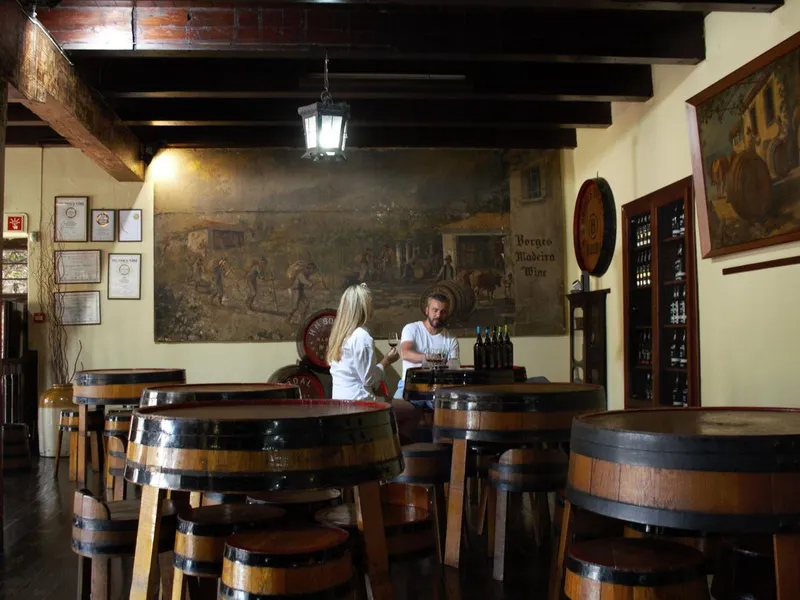 from $23.00
H.M. Borges Winery Guided Tour with Wine Tasting
A short guided tour of the H.M. Borges winery in central Funchal with a wine tasting of 2 to 6 pours, paired with local sweets.
Check Availability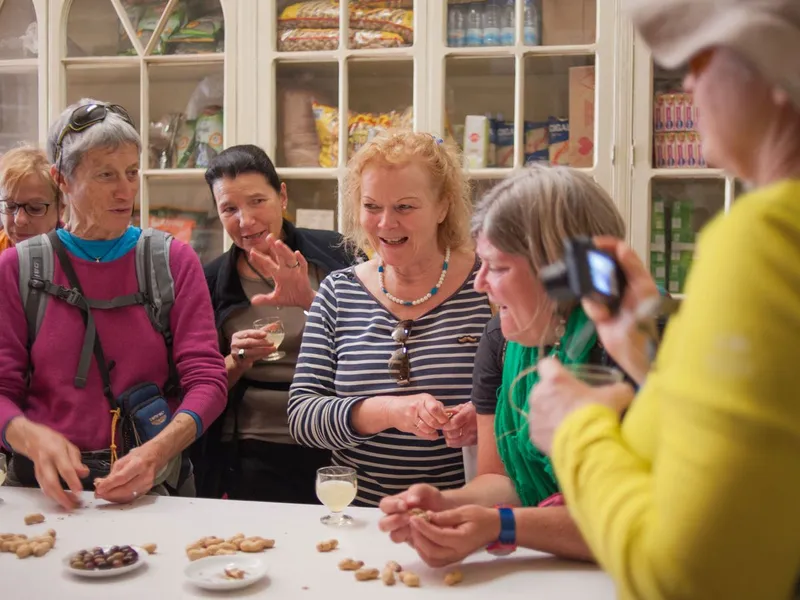 from $109.00
Madeira Food and Wine Walking Tour in Funchal
A small-group Funchal food and wine walk with 11 food tastings and 6 drinks across local taverns and the market, limited to 10 guests.
Check Availability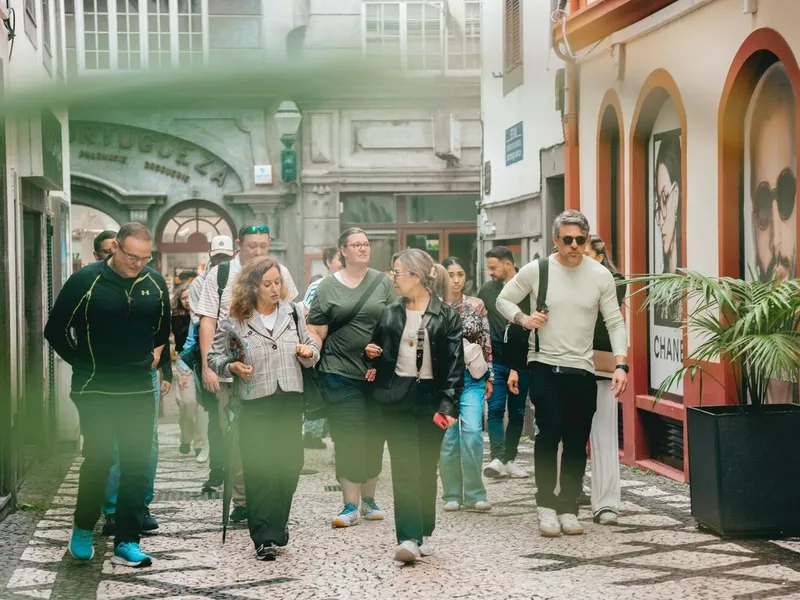 from $107.00
Taste Funchal: Food, Wine and Cultural Tour
A 4 hour Funchal food, wine and culture walk from Rua do Sabão, with vegetarian and gluten-free tasting options.
Check Availability from $19.00
Funchal Old Town Walking Tour
A 2 hour small-group walk through Funchal's Old Town, the Jesuits' College, the Farmers' Market, a wine lodge and a historic sweet factory.
Check AvailabilityPrices, ratings and details are the platform's own. dollar figures are the listed prices — the platform bills in your account's currency.
The Two Wine Lodges the City Lists
Funchal council's own visitor site lists exactly two wine lodges in the city, and this page names those two and nothing else. Both are in the centre, both run guided tastings, and they are very different visits.
Blandy's Wine Lodge, Avenida Arriaga 28
The bigger visit, and the one with a museum attached. Over 650 barrels and vats age here by the canteiro method. Tours run Monday to Sunday with brand ambassadors, in Portuguese, English, German, French and Spanish, and every tour ends in a tasting. The Premium Tour at $26.40 (€23) covers the cooperage, the canteiro ageing rooms, the vine to wine exposition, the Brazilian satinwood vats and the Blandy family museum, then pours 3 wines, and its English departures run Monday to Friday at 10:30, 14:00, 15:00 and 16:00.
The lodge itself opens Monday to Friday 10:00 to 18:30, Saturday 10:00 to 18:00 and Sunday 10:00 to 13:00 and 14:00 to 18:00, and closes on Easter Sunday, 25 and 26 December. Children aged 6 to 17 pay $9.64 (€8.40) and under 6 go free. There is a shop and a bistro and wine bar on site. Room by room detail is on our Blandy's Wine Lodge page.
H.M. Borges, Rua 31 de Janeiro 83
The smaller, family visit. The company was founded in 1877 by Henrique Menezes Borges and has been in its current building, a former cereal mill, since 1924. The fourth generation of the family runs it now. Guided tours and tastings happen in the historic cellars, for groups of up to 18 people, with private Premium and Diamond tastings available, in a room hung with paintings by the German artist Max Römer.
It opens on working days from 09:00 to 12:30 and 14:00 to 17:30, spaces are limited and visits must be booked in advance with the names of everyone coming. The bookable version is the H.M. Borges winery guided tour with wine tasting at $23.00, listed as 1 hour with 2 to 6 pours. The listing states it is not suitable for people with mobility impairments.
Which One to Choose
Our pick for a first visit is the Blandy's Premium Tour: the museum and the cooperage explain the canteiro method better than any tasting note, and three wines is enough to tell Sercial from Malvasia. Our pick if you already know Madeira wine is H.M. Borges, because the room is smaller, the family runs it, and the top pour option reaches six wines.
Both are within a few minutes' walk of each other in the centre, so a determined afternoon can do both. Everything else worth doing in that part of the city is on our Funchal guide.
Sources: Funchal council's list of wine lodges, Blandy's Wine Lodge tours, H.M. Borges visits and Visit Madeira on the Madeira Wine Company museum.
Where to Buy Madeira Wine to Take Home
Visit Madeira's own where to buy list names six places, and those are the only retailers named here. Each entry below is printed as the official page prints it.
Two of these are the lodges above, so a tasting and a bottle can be the same stop. The others are producers and a shop run by the regional institute itself, which also certifies the wine.
- Blandy's Wine Lodge, Avenida Arriaga, Funchal, with its own shop
- H. M. Borges, Rua 31 de Janeiro 83, Funchal
- IVBAM Handicraft Shop, Rua dos Ferreiros 152, Funchal
- Justino's Madeira Wines, Parque Industrial da Cancela, Caniço
- Quinta do Barbusano, Caminho Agrícola do Barbusano
- J. Faria & Filhos, Travessa do Tanque 85/87, Funchal
Certification and What to Check on the Bottle
Every Madeira wine is controlled and certified by IVBAM, the regional institute for wine, embroidery and handicraft, which is also the body that publishes the rules on this page. The words to read are the ones in the tables above: the sweetness word, the grape if there is one, and the age or harvest year.
For the rest of the shopping list, from embroidery to bolo de mel, see Madeira shopping. For fruit, sweets and a market rather than a cellar, Mercado dos Lavradores is the stop.
Source: Visit Madeira, Madeira wine, where to buy and the IVBAM portal.
Vineyards and the Wine Festival
The vineyards are worth seeing even if you never take a tasting, because they explain the wine: around 500 hectares of terraces on Madeira and Porto Santo, from sea level up to 700 metres, worked by hand on stone-walled plots called poios.
Where the Vines Are
Visit Madeira's Madeira Wines Route names the places worth driving to. Between São Vicente and Seixal you can see trellis vines by the sea, some of them a few metres from the water. Estreito de Câmara de Lobos holds the largest vineyard area on the island, running from the coast up to Jardim da Serra at over 600 metres. The Experimental Viticulture Station in Arco de São Jorge houses the Vine and Wine Museum, and Quinta de Santa Luzia, the Blandy family's farm, still produces grapes used in Madeira Wine Company wines.
Two viewpoints on the same route are worth a stop on a north-coast day: Fajã do Barro in Porto Moniz, over vineyards framed by the Atlantic, and Ginjas, looking down the São Vicente valley with vines on both sides. Both fit a day that also takes in Seixal and Porto Moniz.
- São Vicente to Seixal: trellis vines a few metres from the sea
- Estreito de Câmara de Lobos: the largest vineyard area, coast to over 600 m
- Arco de São Jorge: Experimental Viticulture Station with the Vine and Wine Museum
- Quinta de Santa Luzia: the Blandy family farm, grapes for Madeira Wine Company wines
- Fajã do Barro viewpoint, Porto Moniz, and Ginjas over the São Vicente valley
The Wine Festival
The Wine Festival is held during the harvest at the end of summer, mainly in Funchal and Estreito de Câmara de Lobos. The next edition runs from 22 August to 12 September 2027. In Funchal the streets and cellars fill with exhibitions, concerts, folklore and tastings, with the Madeira Wine Lounge in Praça do Povo as the main tasting stage and Concerts in the Vineyards held after the heat of the day. In Estreito the harvest is re-enacted live, grapes stomped by foot, in the first half of September.
The 2026 edition ran from 23 August to 13 September 2026, which sets the pattern: the festival lands in the last week of August and the first two of September. Everything else on the island calendar is on Madeira events, and the month-by-month case for going is on best time to visit Madeira.
Sources: Visit Madeira, Madeira Wines Route and the Wine Festival page.
Madeira Wine Map: The Two Lodges in Central Funchal
Three pins in walking distance of each other in the city centre: the lodge with the museum, the market for everything else edible, and the square that anchors the shopping streets.
Coordinates from Wikidata and OpenStreetMap.
Where the Wine Leads Next
Three pages that follow directly from a tasting.
Blandy's Wine Lodge
The full visit: the cooperage, the satinwood vats, the family museum and which tour is worth its price.
Poncha
The island's other drink, built on sugar cane spirit rather than grapes, and certified by the same regional institute.
Typical Madeira food
What to pour each style with, from limpets and espetada to bolo de mel, which itself contains Madeira wine.
Madeira Wine: Questions
What is special about Madeira wine?
It is fortified by stopping the fermentation with wine alcohol at 96% vol, then deliberately aged by heat, either in tanks at 45 to 50 °C for at least 3 months or in casks for at least 2 years under the warm upper floors of a lodge. That oxidative ageing is why an open bottle keeps for months. The detail is in what makes it different.
Is Madeira wine like sherry or port?
All three are fortified, but this guide will not describe another region's production, because no source on this page covers it. What the label here settles is two things the others do not print the same way: the sweetness band in Baumé degrees and the age category, from a 3 year minimum to a 20 year Frasqueira. Read the sweetness words and the age labels and you can buy without comparing.
Can you drink Madeira wine straight?
Yes, and the regional institute says it can be drunk at any hour of the day or night. Its own pairing advice is dry styles as an aperitif, medium dry with aperitifs or soups, medium sweet with cheese and sweet with desserts, chocolate or coffee. The dishes to drink it beside are on typical Madeira food.
What does Frasqueira mean on a Madeira wine label?
A single stated harvest year, a recommended grape variety, production by the canteiro method and at least 20 years of continuous ageing in wood. Colheita is the lighter version of the same idea: a stated harvest year with at least 5 years in wood. Both are set out in the age labels table.
Which Madeira wine tasting in Funchal should I book?
Our pick for a first visit is the Blandy's Premium Tour at $26.40 (€23), 45 minutes with 3 wines and the family museum, because the cooperage explains the ageing better than any tasting note. If you already know the wine, the H.M. Borges winery tour at $23.00 is smaller and reaches up to 6 pours. Both are compared in the tastings table.
Why do most bottles not name a grape?
Because Tinta Negra makes 80 to 85% of all Madeira wine and is usually sold by age rather than by variety. A bottle labelled Sercial, Verdelho, Boal or Malvasia is telling you the style, while a 5 years or 10 years blend is almost certainly Tinta Negra. See the grape table.
When is the Madeira Wine Festival?
The next edition runs from 22 August to 12 September 2027 in Funchal and Estreito de Câmara de Lobos, with the Madeira Wine Lounge in Praça do Povo and a live harvest re-enactment in Estreito in the first half of September. Details are in vineyards and the festival and on Madeira events.
Madeira Wine on Film
Three explainers on what the wine is and how the heat ageing works, worth ten minutes before a lodge tasting.
Madeira Wine Explained: What It Is, What It Tastes Like and How to Drink It
A clear run through the styles and the serving rules covered on this page.
Video: Behind the BarMadeira Wine: Origins and Unique Aging Method
Why heat ageing exists at all, which is the thing estufagem and canteiro both come from.
Video: WineberiaMadeira and Its Wine Share an Identity
A short news feature filmed on the island, useful for seeing the terraces and the lodges.
Video: CBS NewsVideos load from YouTube only when you press play. Producers shown are the creators' choices, not this guide's.
Prices, hours and terms are set by the venue or operator and confirmed at checkout.
We may earn a commission if you book through one of our links, at no extra cost to you. Full affiliate disclosure